What If My Child Is Nervous About Joining a New Class?
Starting a new class can feel like a big step for a child.
Even if they want to go.
Even if they love the activity.
Even if you know, deep down, that they will probably enjoy it once they get there.
New places, new people, new routines and not knowing what to expect can all feel overwhelming. Some children walk straight in and barely look back. Others need more time. They might ask lots of questions, become clingy at the door, say they do not want to go, or worry they will not know what to do.
That does not mean the class is wrong for them.
It usually means they need a gentle way in.
At Speckled Dog Studio in Cranleigh, we understand that joining a new art class can feel daunting for some children. Our aim is never to push a child before they are ready. It is to help them feel welcome, supported and confident enough to have a go.
Nervousness is normal
It is easy for adults to forget how big a new class can feel.
A child may be wondering:
Will I know anyone?
What if I do it wrong?
Where do I sit?
What if everyone else is better than me?
What if I need help?
What if I do not like it?
These worries can seem small from the outside, but they can feel very real to the child having them.
Nervousness is not a sign that your child cannot cope. It is often a sign that they care, that they are thinking ahead, or that they need more information before they feel safe enough to join in.
The first step is to take those feelings seriously without making the whole thing feel bigger than it needs to be.
Tell them what to expect
Children often feel more confident when they know what is going to happen.
Before their first class, talk them through the basics in a simple way. Explain where they are going, who will be there, what kind of activity they might do, how long the class will last, and when you will come back.
You do not need to over-explain every detail.
In fact, too much information can sometimes make a nervous child more anxious.
Keep it simple and practical.
You might say, “You’ll go into the studio, sit at the table with the other children, and the teacher will show you what you’re making. You can ask for help if you need it. I’ll come back at the end.”
For some children, that is enough to make the unknown feel less scary.
Do not promise perfection
It can be tempting to say, “You’ll love it!”
You might be right.
But for a nervous child, that can feel like pressure. What if they do not love it straight away? What if they feel unsure? What if the first five minutes are hard?
A better approach is to keep expectations realistic.
You might say, “It’s normal to feel nervous before something new. You do not have to feel confident straight away. Just go in, have a try, and see how it feels.”
That gives your child permission to be uncertain.
It also helps them understand that confidence can come after they start, not before.
Give them time to settle
Some children need a slow start.
They may not want to speak much at first. They may want to watch before joining in. They may be very careful with materials until they understand what is expected.
That is all fine.
A good class should allow children to settle in without making them feel rushed or exposed. They should not be forced to introduce themselves in front of everyone if that feels too much. They should not be made to share their work before they are ready.
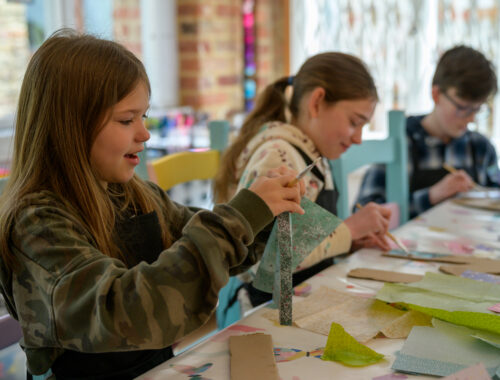
Small creative groups can help because they feel more manageable. There are fewer children, less noise and more chance for the teacher to notice who needs a little extra support.
Often, once a child has found their seat, picked up a pencil or brush, and started making something, the nerves begin to soften.
Art can be a gentle way to join in
Art is a lovely activity for nervous children because it gives them something to focus on.
They do not have to perform. They do not have to run into a group game. They do not have to be loud or outgoing.
They can begin by making.
A brush, pencil, piece of clay or sheet of paper gives them a place to put their attention. It also gives them something to talk about when they are ready.
Instead of having to start a conversation from nowhere, they can ask about colours, materials or what someone else is making. These small, natural interactions can make joining in feel easier.
Creativity gives children a way to be part of the group without needing to be the centre of attention.
Help them focus on trying, not being good
Many children worry about whether they will be “good enough”.
This is especially common in art.
They may say they cannot draw. They may worry their painting will look silly. They may compare themselves with other children before they have even begun.
This is where the right message matters.
Art classes are not about arriving as an expert. They are about learning, trying, experimenting and building confidence over time.
Remind your child that everyone’s work will look different, and that is the point. They do not need to make the best picture in the room. They just need to have a go.
A good creative class should celebrate effort, ideas and curiosity, not just neat results.
Keep goodbye short and reassuring
Drop-off can be the hardest moment.
If your child is nervous, it is natural to want to stay, talk, negotiate or give lots of reassurance. But long goodbyes can sometimes make things harder.
A simple, confident goodbye is often best.
Let them know when you will be back, remind them they can ask the teacher for help, and leave with warmth and certainty.
This does not mean dismissing their feelings. It means showing them that you believe they can manage.
Children often borrow confidence from the adults around them. If you seem worried, they may feel there is something to worry about. If you seem kind but steady, it can help them feel safer.
Celebrate small wins
After the class, try not to ask too many big questions straight away.
Some children need time to process.
Instead of “Did you love it?” you might ask, “What did you make?” or “Which colour did you use first?”.
If the answer is not wildly enthusiastic, that is fine.
The first class may simply be about getting through the door, meeting the teacher and understanding the space. That is still progress.
For a nervous child, small wins matter.
They went in. They stayed. They tried. They made something. They came out knowing a little more than they did before.
That is a good start.
It may take more than one session
Not every child relaxes fully in the first class.
Some need two or three sessions before they feel at home. They need to recognise the room, the routine, the teacher and the other children. Once the setting becomes familiar, confidence often grows.
Try not to judge the whole experience too quickly.
A child who seems unsure after one session may be much happier once they know what to expect.
Consistency can be very reassuring. The more familiar the class becomes, the less energy your child has to spend on worrying about the unknown.
New classes at Speckled Dog Studio
At Speckled Dog Studio in Cranleigh, we welcome children with different personalities, confidence levels and starting points.
Some children arrive ready to get stuck in. Others need time to settle. Both are absolutely fine.
Our children’s art classes are friendly, creative and encouraging. We keep the atmosphere supportive, give clear guidance, and help children build confidence through making.
Your child does not need to be naturally outgoing.
They do not need to be brilliant at art.
They do not even need to feel confident on day one.
They just need a safe, welcoming place to start.
If your child is nervous about joining a new class, we would be very happy to help them take that first step gently.